Other Standard of the Plane Angle
A plane angle is the angle between two rays originating from the same point and is defined as the ratio of the arc length of a circle to its radius. The unit of angle measurement is the radian (rad). One radian is the angle α between two radii of a circle r, where the arc length between them equals the radius.
Angular measurements, along with length measurements, are among the most frequently used units in mechanical engineering, precision mechanics, and optics.
Composition of the Plane Angle Standard
The National Standard for Plane Angle (NE) consists of a complex system of angular measures, instruments, and devices used for the definition, maintenance, and reproduction of the angular scale. The system includes the following components:
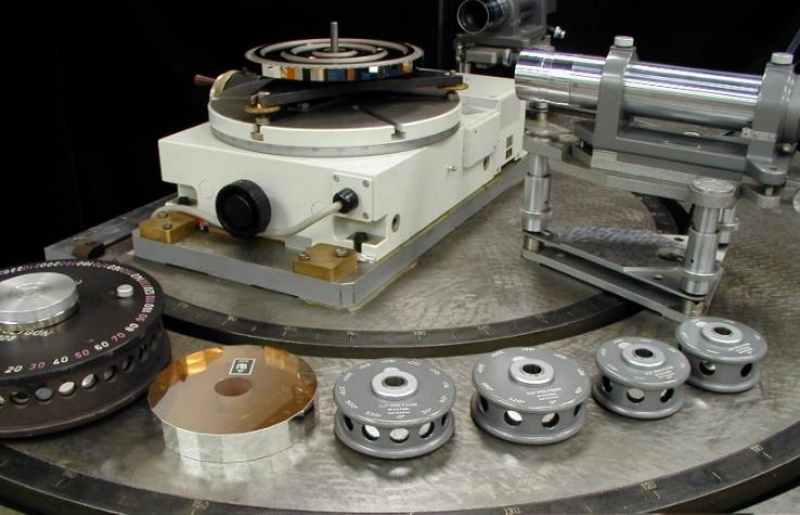
- System of Standard Polygons – used for reference in high-precision angle measurement.
- Automatic Calibration Device for Polygons (EZB-3) – ensures high-accuracy calibration of angular references.
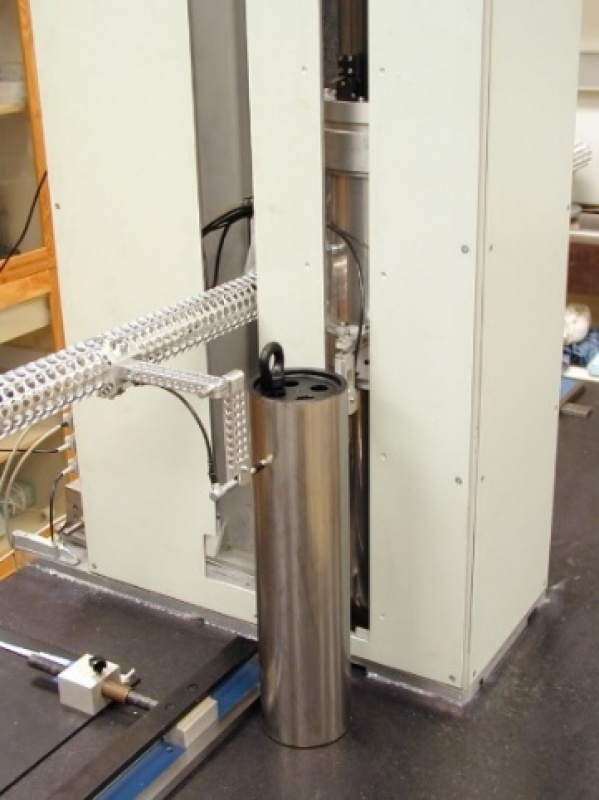
- Laser Goniometer (GS1L) – a high-precision instrument for measuring small angles using laser-based technology.
- Small Angle Generator (SAG TA-48) – used for generating and calibration of very small angular values.
Applications
- Calibration of angular measurement instruments in metrology laboratories.
- Quality control in manufacturing industries, including aerospace, optics, and mechanical engineering.
- Precision alignment of optical and mechanical components.
- Standardization of angular measurements for scientific and industrial applications.
Importance
The National Standard for Plane Angle ensures the highest accuracy and traceability in angular measurements, supporting industrial, scientific, and research applications that require precision in angle determination and calibration.